
What Type of Damper is Best? Pros and Cons of Each Type
There are many mechanics related to the chimney and fireplace. Dampers play an important part in keeping the heat in your home. There are two types of dampers: top-mounted and throat. Let us discuss what each is and the pros and cons of each.
A fireplace damper is a flap that opens and closes. It prevents heat from escaping when closed and allows smoke to escape when opened and properly vented.
Let’s take a closer look at each.
Top-Mounted Damper
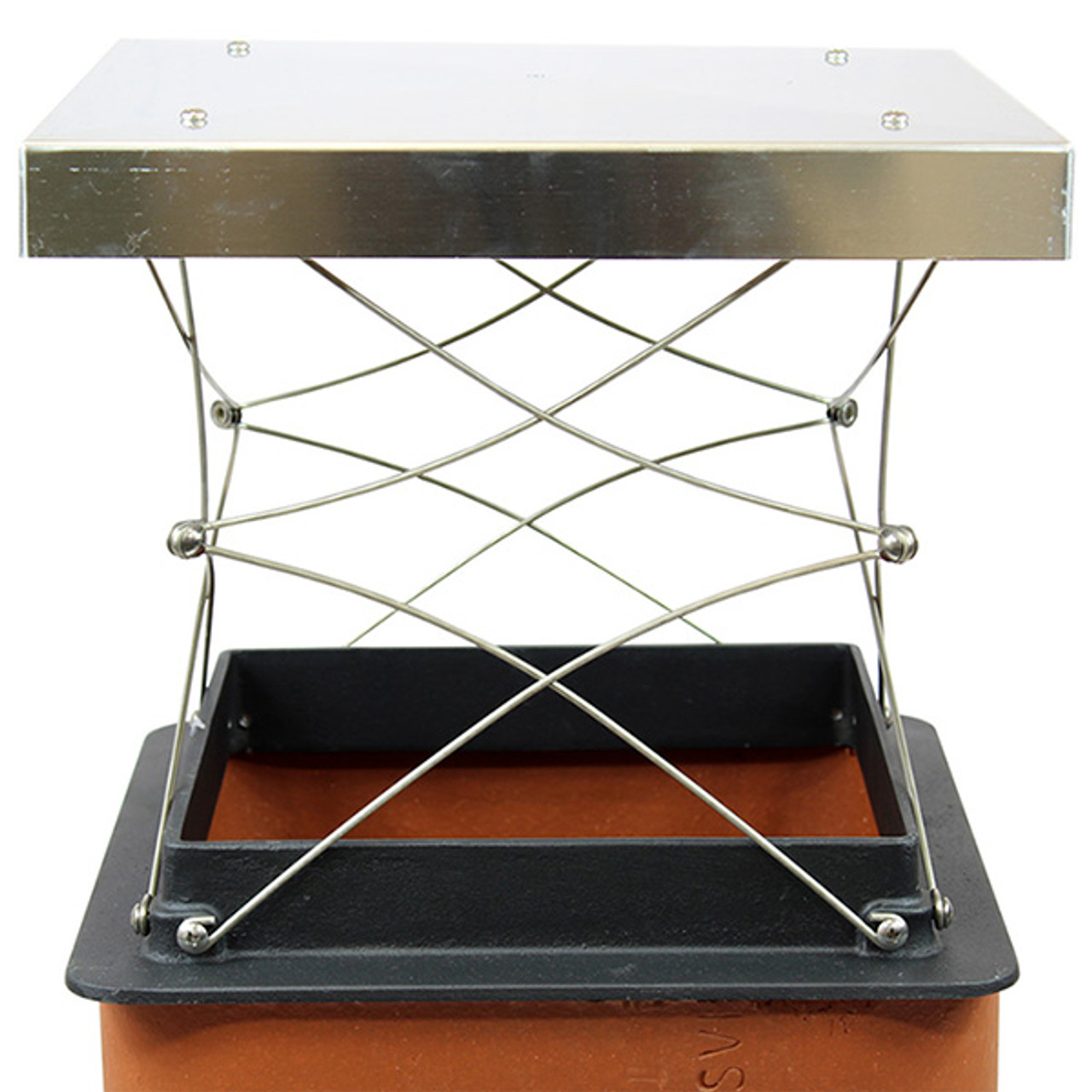
A top-mounted damper is a type of damper installed at the very top of the chimney, rather than inside the firebox. This type is usually installed after the original damper needs repair.
How It Works
- The damper sits on the chimney crown. It often replaces the cap or works along with it.
- A cable, usually made of stainless steel, runs down the flue into the fireplace.
- You operate the damper by pulling or releasing the handle to open or close it. This is found inside the firebox.
- When the damper is closed, it seals the chimney opening.
Pros:
- Excellent air seal. A rubber gasket closes the damper tightly.
- Energy efficient. Heat or cooled air will not escape.
- Keeps out rain and animals.
- Protects the chimney flue.
Cons:
- Costly installation.
- The pull cable system can wear.
- Exposure to the weather. It may need to be replaced over time.
Throat Damper
A throat damper is a metal plate that opens and closes the flue to control airflow. This type of damper is located just inside the firebox.
How It Works
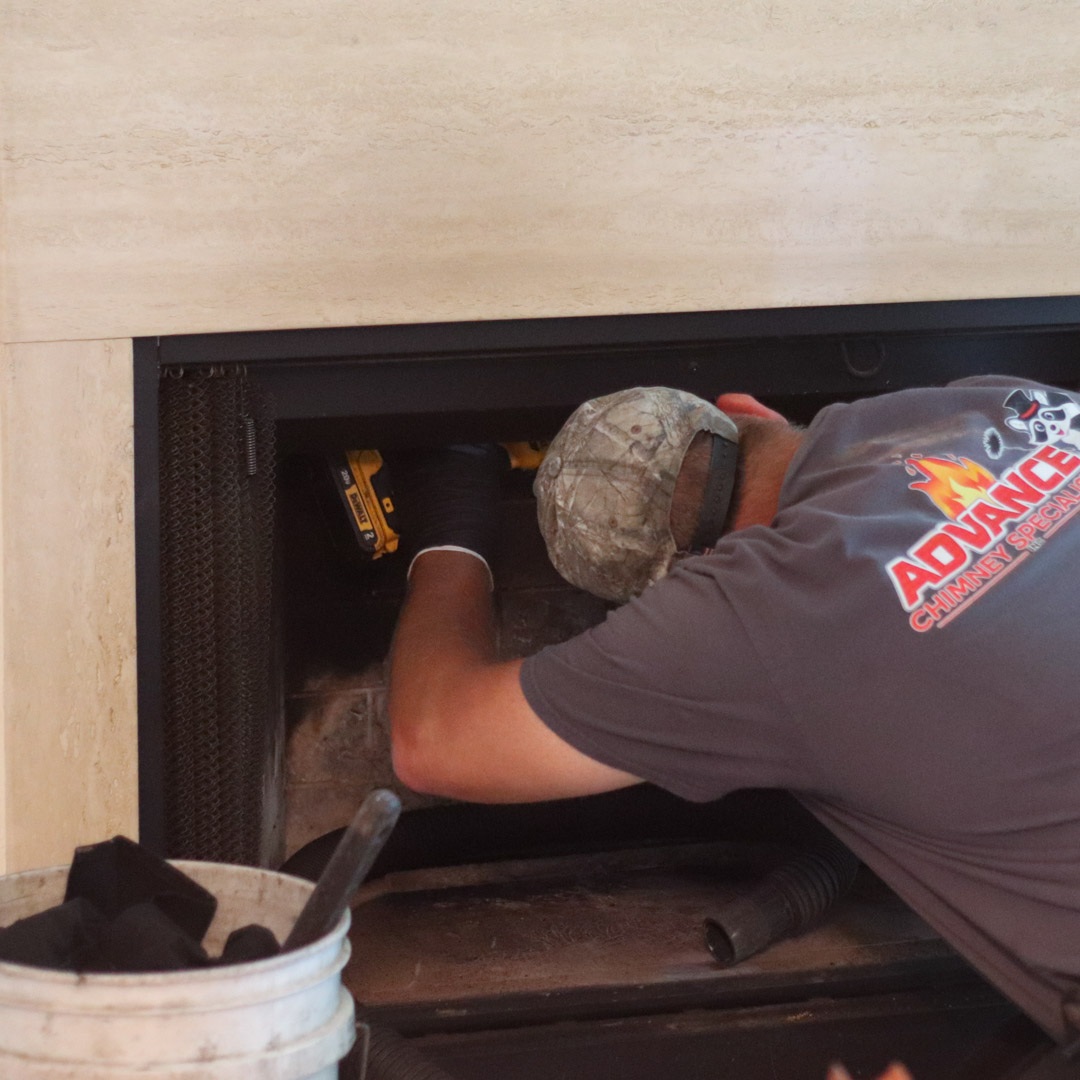
- The throat damper is a cast-iron or steel handle, lever, or rotating knob. The damper is attached to the masonry inside the firebox.
- While in the open position, it allows smoke and gases to go up the chimney when you have a fire.
- In the closed position, it prevents the indoor warm air from escaping up the chimney.
Pros-
- Already installed in most homes.
- Easy to operate, with easy access, just inside the firebox.
- Less expensive. Usually installed in homes when a chimney is constructed.
- Simple design – The only part is the lever and the attachment to the masonry.
Cons-
- Often leaks air – hard to get a tight seal.
- Energy loss. Warm air often escapes, causing heat loss.
- It can rust or warp. Moisture in the firebox can cause rust. Heat may warp and cause damage.
- Because this type of damper is at ground level, animals and cold air can enter the flue.
Advance Chimney Sweeps, Inc. was founded by Michael Schock in 1996, and over the last 20+ years, the company has grown to be one of the largest multi-truck operations in the state.
We are one of the few chimney companies in Southwestern PA with a CSIA-certified lead technician on every truck, and every one of our employees is highly trained before they enter your home. You can count on us to be thorough, reliable, professional, considerate, and clean – that’s one thing that hasn’t changed since the company was founded decades ago.